
Healthcare does not begin only when a patient meets a nurse, doctor, or laboratory technician. It begins with the systems that make care possible: reliable electricity, safe equipment, clean water, refrigeration, lighting, communications, and trained people who can keep those systems working.
For hospitals, clinics, laboratories, and health centers, power is not a convenience. It is infrastructure for life-saving work. A short outage can interrupt a consultation, delay a laboratory result, damage temperature-sensitive supplies, or stop essential medical equipment. In rural and fast-growing communities, unreliable power can also limit the hours a facility can serve patients.
Energy planning is health planning
This is why renewable energy and healthcare technology need to be planned together. Solar photovoltaic systems, battery storage, backup generators, electrical protection, and preventive maintenance are most effective when they are designed around the real needs of the facility.
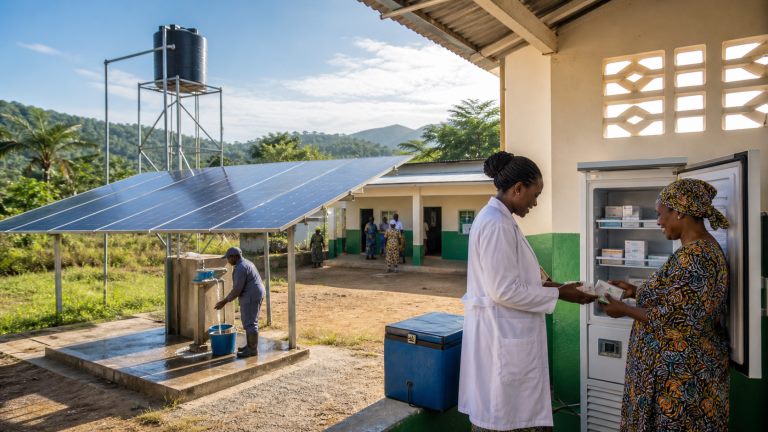
A health center that runs lights, vaccine refrigeration, water pumping, diagnostic equipment, computers, and communication tools needs more than a simple solar panel installation. It needs a complete load assessment, proper system sizing, safe wiring, surge protection, clear operating procedures, and a maintenance plan that keeps the system dependable after commissioning.
What reliable power supports
Stable electricity helps healthcare teams protect medicines and samples, operate diagnostic equipment, maintain clean water supply, support nighttime emergencies, and communicate with patients and partner institutions. It also gives staff more confidence because they are not forced to work around avoidable interruptions.
For laboratories, power quality is especially important. Sensitive equipment can be affected by voltage drops, surges, or poor grounding. A good energy design therefore considers both availability and quality of power. The goal is not just to keep the lights on; the goal is to keep healthcare services accurate, safe, and consistent.
A practical approach for institutions
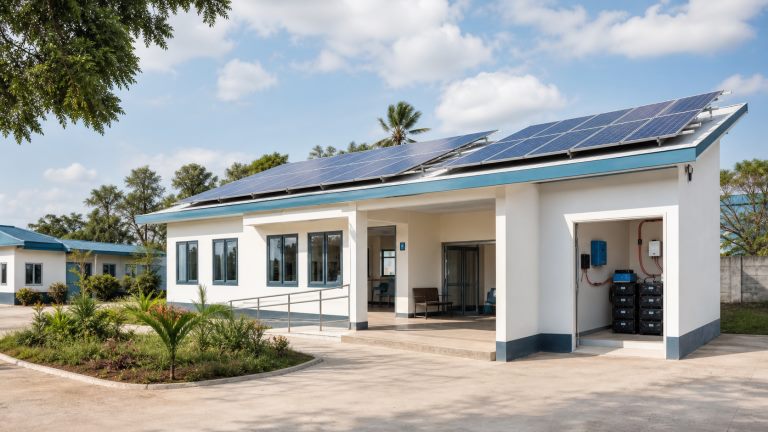
Every facility should begin with an energy and equipment audit. The audit should identify essential loads, daily energy use, backup requirements, equipment risks, maintenance gaps, and future expansion needs. From there, the right solution may include solar power, battery backup, generator integration, efficient lighting, improved distribution panels, grounding, surge protection, and staff training.
Maintenance should be part of the plan from the beginning. Batteries, inverters, charge controllers, panels, wiring, and medical devices all need periodic checks. Preventive maintenance is usually less expensive than emergency repair, and it protects the investment made by the institution.
HenHes brings energy and health together
HenHes works at the connection point between renewable energy and healthcare technology. That combination matters because a facility does not experience energy, equipment, safety, and service delivery as separate problems. They affect one another every day.
By treating power systems and medical technology as one operational environment, institutions can build stronger facilities, reduce downtime, and deliver better service to communities. Reliable energy is not separate from healthcare. It is one of the foundations that makes modern healthcare possible.