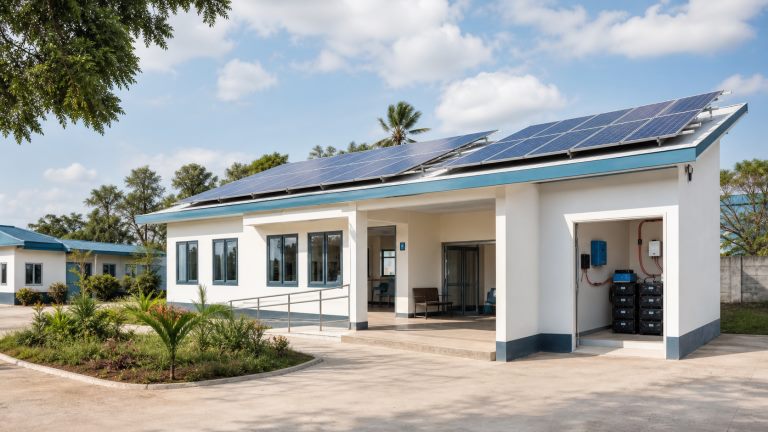

In a clinic, electricity is not only a utility bill. It is part of the clinical service. It supports lighting, refrigeration, communication, water pumping, records, diagnostic tools, and emergency response. When power fails, the quality and timing of care can be affected immediately.
Solar backup power helps health facilities reduce those interruptions. A well-designed system can keep essential services running during outages, reduce dependence on fuel logistics, and give staff a more predictable working environment.
Start with the essential loads
The right solar backup system begins with a clear list of critical loads. For many clinics, that list includes vaccine refrigeration, selected laboratory equipment, examination room lighting, communication devices, computers, water pumps, security lighting, and essential sockets.
Not every device should be placed on backup power. Separating essential loads from non-essential loads helps keep the system affordable and reliable. It also prevents battery capacity from being wasted on equipment that can safely wait until normal power returns.
Design for real operating conditions
A clinic does not operate like a private home. Power use changes during consultations, laboratory work, emergencies, and night duty. System design should consider daily energy demand, peak demand, battery autonomy, inverter capacity, expansion plans, and local maintenance capacity.
Good design also includes protection. Surge protection, safe grounding, quality breakers, tidy wiring, ventilation, and clear labels are not small details. They protect staff, patients, equipment, and the investment made in the energy system.
Backup power needs maintenance
Solar systems are reliable when they are maintained. Panels should be cleaned and inspected. Batteries need periodic checks. Inverters and charge controllers should be monitored for warnings. Cable terminations, distribution panels, and protective devices should be reviewed before a small fault becomes a service interruption.
A maintenance schedule turns backup power from a one-time installation into a dependable asset. For healthcare facilities, that discipline is essential because the system is supporting public service, not just convenience.
Reliable energy builds trust
Patients may not see the battery bank or inverter room, but they feel the result when services continue without interruption. Staff can work with confidence, medicines can remain protected, and the facility can respond better when the grid is unstable.
For health centers across Cameroon and Africa, solar backup power is one practical way to strengthen service delivery. It is not separate from healthcare. It is infrastructure that helps healthcare happen.